Empath
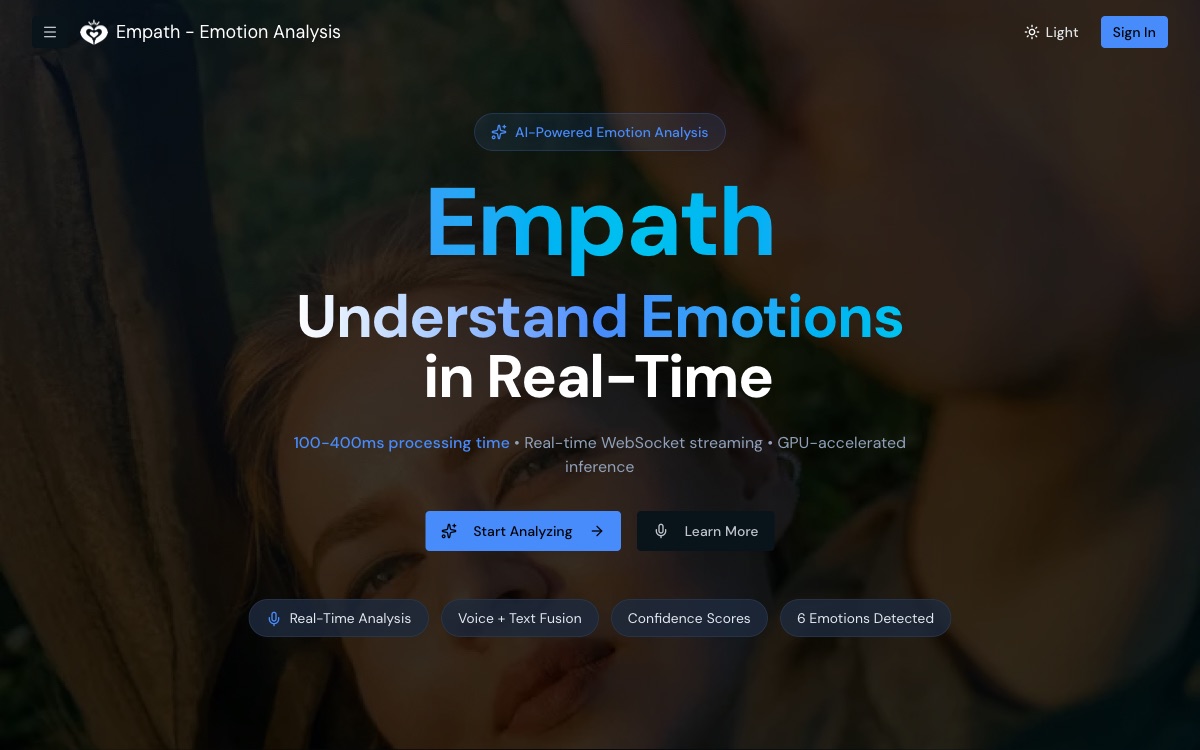
Reads emotion from voice and text in real time, and shows both readings side by side — wording and tone together.
Discontinued. This app is no longer running. Its readings depended on a hosted speech-to-text service billed by the minute of audio, and that service is no longer funded. The page stays as a record of what was built.
Why we built it
Text sentiment and vocal tone disagree constantly — 'I'm fine' is the standard example, and a model that reads only the words will always get it wrong. Empath runs both: the transcript and the audio, with a confidence score on each emotion and the two readings visible together. That is why it exists as a speech system rather than a text classifier — the whole point is the disagreement between the channels, not a tidy label for either one.
How it works
Speech is transcribed as it is spoken and the audio is streamed over a WebSocket, so the reading updates mid-sentence rather than waiting for the speaker to stop. The words and the tone are scored separately and shown together, each emotion carrying the proportion the model assigned and a confidence score.
The accuracy figures on the site are the ones the project measured on public emotion datasets, published with the method written out, so the numbers can be checked rather than taken on trust.
What it does
Voice and text read together
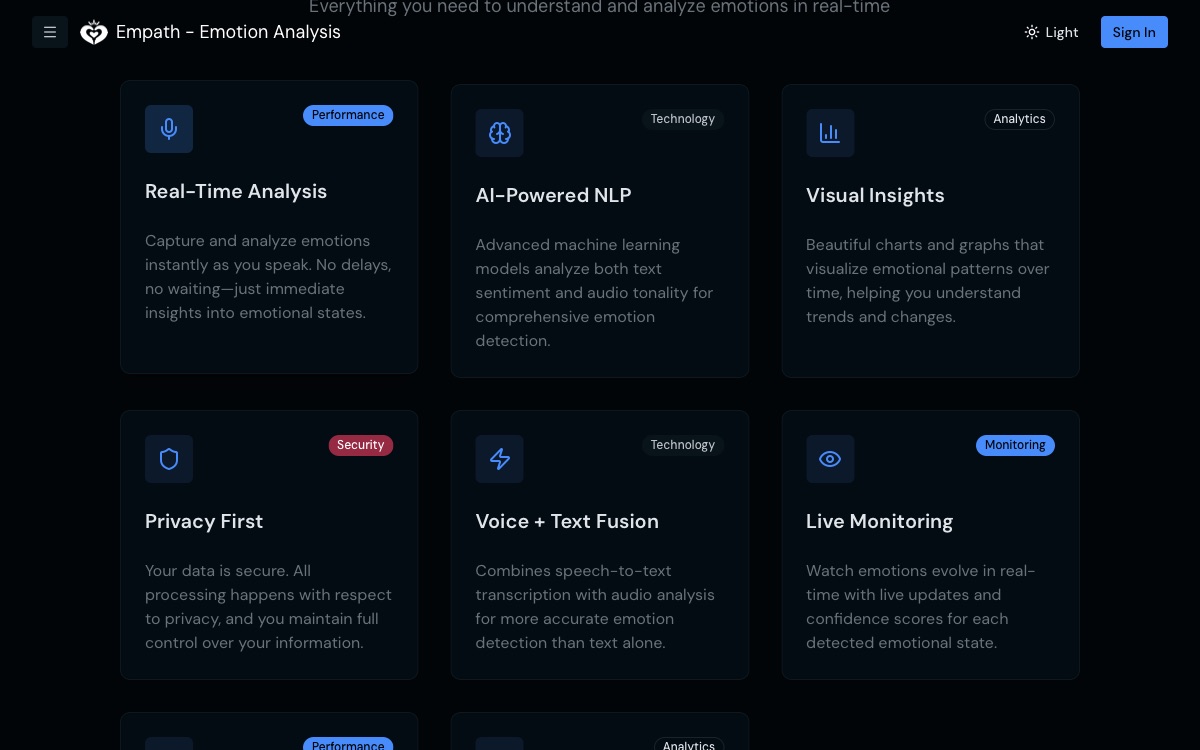
Speech-to-text supplies the words and the audio model supplies the tone, and the result carries a confidence score for each emotion.
Six emotions
Happy, neutral, calm, sad, angry and excited, each with the proportion the model assigned rather than a single label.
Real-time streaming
Audio is streamed over a WebSocket as it is spoken, so the reading updates while the sentence is still going.
A published benchmark
The accuracy numbers on the site are the ones the project measured on public emotion datasets, with the method written out.
Inside the app
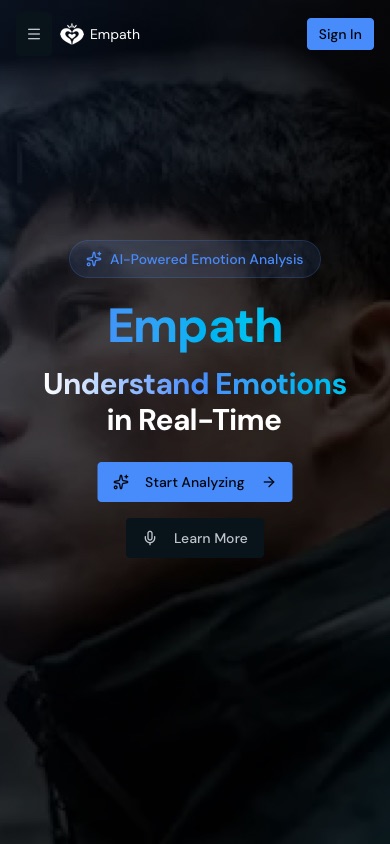
Captured from the running product — no mock-ups.
On a phone
What it does not do
A limit named before you open the app is worth more than a feature list that never mentions one.
- It is a research demonstration, not a diagnostic. A reading of emotion from voice is an estimate and must not be used to assess a person.
- The model answers in six categories — happy, neutral, calm, sad, angry, excited — and does not handle sarcasm, irony or cultural differences in tone.
- Accuracy varies with accent, language and recording quality; a poor microphone moves the reading more than the speaker's mood does.